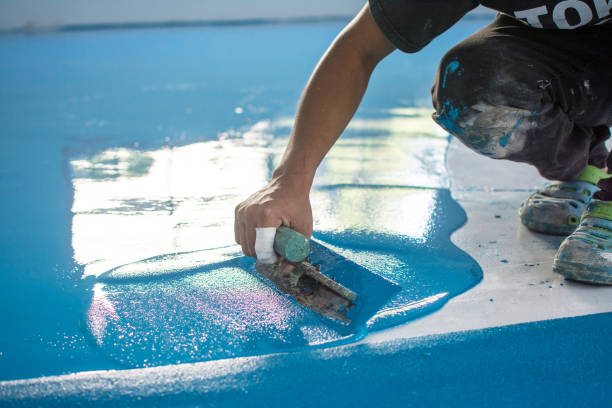
The kitchen is often said to be the heart of the home, and for good reason. It’s where meals are cooked, family members converge, and everyday life happens. Due to this constant action, kitchen flooring needs to be able to endure heavy foot traffic, spills, and temperature changes without compromising its strength or looks.
And that’s why so many homeowners are turning to epoxy kitchen flooring instead of traditional materials like tile, vinyl, or hardwood. Epoxy flooring is known for its durability and seamless finish, making it a practical surface that can stand up to the everyday rigors of a kitchen while looking sleek and modern.
How to Get Started with Epoxy Kitchen Flooring
Epoxy flooring consists of epoxy resins and hardeners that react chemically to generate a dense and robust substrate. When applied on top of a level concrete base, this mixture creates an extremely strong coating that adheres tightly to the floor.
How Epoxy Flooring Is Applied
Epoxy must stick properly, so extensive preparation is needed for the installation process.
Professionals usually go through several critical stages:
1. Prepping the concrete surface: Cleaning
2. Repairing cracks or imperfections
3. Propagating primer and 3 coats of epoxy
4. Allowing time for curing so that it reaches maximum strength
Once cured, the floor is a solid surface, seamless, and able to handle everyday kitchen activity.
Why the Seamless Design Matters
More common flooring materials tend to have seams or grout lines between the tiles, which trap dirt and moisture over time. Epoxy fills those gaps as it forms a seamless coating all over the floor.
This design offers several benefits:
- Fewer places for bacteria and gunk to settle
2. A smoother and cleaner appearance
3. Is easier to maintain than grout-based flooringThe outcome is a kitchen floor that stays both functional and visually attractive over many years.
Practical Advantages for Busy Kitchens
Kitchen floors are up against special challenges, too. Certain materials can be damaged by spilled liquids, dropped utensils, and heavy appliances. That is why epoxy flooring offers a durable solution, built to endure these daily pressures.
Resistance to Spills and Stains
Cooking inherently includes oils, sauces, and water. Most conventional flooring materials soak up liquids and develop stains with time. Epoxy floors, however, are non-porous.
This means that:
- Liquids sit on the surface rather than soak in
2. It becomes less likely for stains to form
3. Cleanup becomes faster and easierFor homes where a lot of cooking occurs, this moisture- and stain-resistance difference can be significant when it comes to long-term maintenance.
Simple Cleaning and Maintenance
Epoxy flooring is also easy to maintain as well. Epoxy surfaces are typically cleaned with basic household tools, unlike tile floors that require scrubbing grout lines.
Typical care involves:
- Dusting and vacuuming toeliminatedirt and debris
2. Using mild cleaning solutions and mopping regularly
3. Wiping spills quickly to retain shineThe smooth, sealed surface leaves little crevice for dirt to collect in.
Why Epoxy Kitchen Flooring in New Jersey Is Becoming More Popular
Often, homeowners have different environmental factors depending on where they live that affect their flooring choices. In areas such as New Jersey, seasonal humidity and temperature changes can lead to certain materials expanding, contracting or decaying over time.
Flooring That Handles Climate Changes
Wood flooring may warp in humid conditions, and tile-floor grout can crack with temperature fluctuations. This means that epoxy flooring does well in such conditions since this product adheres directly to the substrate of concrete.
This stability gives homeowners some benefit, especially when considering epoxy kitchen flooring nj. Resistant to moisture and retains its structural integrity all year round.
Modern Kitchen Spaces with Design Flexibility
Perhaps the most notorious misconception about epoxy flooring here is that it’s best suited for industrial environments such as warehouses or garages. Modern methods enable epoxy coatings to be produced in hundreds of decorative finishes for use in residential kitchens.
Popular Design Styles
Epoxy flooring could be designed to suit various kitchen styles. Some popular choices include:
Finishes in solid colors for a cleaner and more minimalist appearance
- Subtle textured decorative flake systems that add visual depth
2. Glossy, marble-like appearances created by metallic epoxy effects
3. Patterns reminiscent of stone or natural patternsSince epoxy starts out liquid before curing, installers can create patterns that are challenging with traditional materials.
Enhancing Light and Space
Glossy epoxy surfaces bounce light, which can brighten kitchens that have limited natural lighting. This reflective quality can also help smaller spaces feel more open and visually balanced. Epoxy flooring makes a sleek and cohesive base for modern cabinets, countertops, and lighting.
Long-Term Durability and Value
When homeowners invest in new flooring, they typically want something that will last for a long time. One of the biggest benefits that epoxy coatings provide is durability.
Safety Considerations
Spilled liquids can make kitchen floors slippery at times. There are slip-resistant additives that can be used in epoxy systems to increase traction without significantly affecting the look of the floor. This extra safety layer makes the surface more comfortable for places where water or oil are sometimes spilled.
Conclusion
Kitchen floors have to be tough, easy to clean, and look good. Materials that perform well in other rooms may not be able to cope with the heavy traffic and wetness in an active kitchen.
Epoxy kitchen flooring is just the right mix for a lot of homeowners. Its non-porous surface resists spills and stains, and the durable coating can stand up to heavy foot traffic and appliances. Simultaneously, modern design options will allow epoxy floors to blend with current kitchen fashions.
As a result, the demand for epoxy kitchen flooring NJ never stops growing as homeowners try to find surfaces with both purpose and beauty. Alpha Floors. As long as it’s installed properly and maintained on a regular basis, epoxy flooring can essentially be the perfect base for a kitchen that stays good-looking and functional for years.