A warehouse in Pune switched its picking process last year. Paper checklists went out. Barcode scanners and a routing algorithm came in. Order errors dropped from 6% to under 1% in eleven weeks. That’s logistics automation doing what it actually does — not some abstract “digital transformation” buzzword, just fewer mistakes and faster trucks.
I’ve spent time around supply chain teams who resisted automation for years, convinced their manual system “worked fine.” It didn’t. It just hadn’t broken yet. Once volume climbs past a certain point, human-only operations start bleeding money quietly, and nobody notices until the quarterly numbers land.
Warehouse Robotics Are the Most Visible Piece
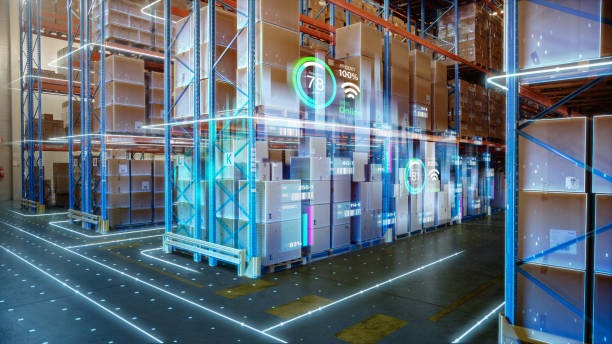
Walk into any modern fulfillment center and you’ll see it first: autonomous mobile robots gliding between shelves, picking up pallets, dropping them at packing stations. Companies like Amazon popularized this with Kiva robots back in 2012, and now smaller players use similar tech at a fraction of the cost.
Robotic arms handle repetitive lifting. Conveyor systems move goods without a single human hand touching them until the final packing stage. This is logistics automation at its most physical — machines replacing the parts of warehouse work that wreck human backs and waste human attention.
And here’s the thing nobody tells you upfront: robots don’t reduce headcount as much as vendors promise. They shift workers toward monitoring, maintenance, and exception handling. Different job. Not zero job.
IoT Sensors Track Everything, All the Time
Every pallet, every container, every delivery van — tagged, tracked, reporting back in real time. GPS units on trucks. Temperature sensors in refrigerated containers (critical for pharma and food shipments). RFID tags on individual SKUs.
I remember a client in the cold-chain business who lost an entire shipment of vaccines because a refrigeration unit failed silently overnight. No sensor, no alert, no fix. That’s exactly the failure IoT-driven logistics automation is built to prevent. Sensors don’t sleep. They flag the deviation the second it happens.
The data pouring in from these sensors feeds directly into the next layer.
AI and Machine Learning Predict What’s Coming
This is where logistics automation stops reacting and starts predicting. Machine learning models chew through years of shipment data — seasonal spikes, weather disruptions, port congestion patterns — and forecast demand weeks or months out.
Route optimization software does something similar on a smaller scale. It recalculates delivery paths on the fly when traffic shifts or a driver calls in sick. UPS’s ORION system reportedly saves the company millions of miles driven per year just from smarter routing decisions.
Predictive maintenance is the quieter win here. Sensors on forklifts and conveyor motors feed vibration and temperature data into models that flag “this part will fail in nine days” before it actually does. Fixing a $40 belt beats replacing a $4,000 motor after it seizes.

Warehouse Management Systems Tie It Together
None of the robots, sensors, or AI models mean much without software coordinating them. Warehouse Management Systems (WMS) and Transportation Management Systems (TMS) act as the control tower — assigning tasks, tracking inventory levels, syncing with e-commerce platforms.
Modern WMS platforms integrate directly with ERP software, so when an online order comes in, the system automatically checks stock, assigns a picker (human or robot), prints a label, and updates the customer’s tracking page. That whole sequence used to take a phone call and a spreadsheet.
Cloud-based logistics automation platforms have made this affordable even for mid-size operations that couldn’t justify an enterprise SAP rollout five years ago.
Blockchain Adds Trust to the Chain
Less flashy than robots, but genuinely useful. Blockchain creates a tamper-proof record of who touched a shipment, when, and under what conditions. Maersk and IBM built TradeLens for exactly this — reducing paperwork fraud and speeding up customs clearance across international shipping.
For anyone moving high-value or regulated goods, this layer of logistics automation cuts disputes down dramatically. No more “he said, she said” over which party damaged the goods.
Drones and Autonomous Vehicles Handle Last-Mile Delivery
Still early-stage in most markets, but not fictional anymore. Drone delivery is live in parts of the US and Africa for medical supplies. Self-driving delivery vehicles are being tested by companies like Nuro in controlled zones.
Is this ready for every city tomorrow? No. Regulatory hurdles, weather limits, and public trust issues are real. But the trajectory is clear, and any serious logistics automation strategy now includes a line item for testing these technologies, even at small scale.
Conclusion
Pick one bottleneck in your current operation — picking errors, delayed shipments, blind spots in inventory — and match it to the right piece of this stack before buying anything else. A mid-size distributor doesn’t need drones and blockchain on day one; a smart WMS and a few IoT sensors will likely fix 80% of the pain. Start small, measure the error rate before and after, and scale the pieces that actually move the number. That’s the honest path into logistics automation — not a full-stack overhaul, just the next fix that pays for itself.